The EU economy in 2026: the main challenges, prospects and role of the EU in the world economy
While European companies used to dominate many global markets, the situation is changing.
The economy of the European Union today is experiencing one of the most difficult periods in recent decades. Pandemic, energy crisis, high inflation, geopolitical tensions and increased competition from China and the United States have become serious tests for European businesses. However, despite all the difficulties, the European Union remains one of the largest economies in the world, accounting for about 15% of global GDP and maintaining its status as a global hub for industry, technology, finance and international trade.
Many analysts have been talking about “Europe’s decline” for several years, but the real economic indicators show a more complex picture. The EU does face serious structural challenges, but at the same time it retains a huge potential due to its large-scale internal market, developed industrial base and high technological competence.
A global economic giant
The European Union unites 27 countries with a population of more than 450 million people. It is one of the largest consumer markets in the world, which is comparable in volume to the economies of the United States and China.
The basis of the EU economy is:
- industrial production;
- financial sector;
- high technology;
- transport and logistics;
- energy;
- agriculture;
- services.
Unlike many other regions of the world, the EU economy is highly diversified. Here, at the same time, the automotive industry, mechanical engineering, chemical industry, pharmaceuticals, aviation, agriculture and the digital economy are developed.
It is this diversification that enables the EU to remain resilient even in times of global crisis.
Germany remains the locomotive of Europe
When it comes to the EU economy, it is impossible to ignore Germany.
Europe’s largest economy accounts for almost a quarter of the EU’s total GDP.
German industry has been a model of efficiency for decades due to a combination of factors:
- cheap energy;
- high-tech;
- developed export model;
- skilled labor force.
But it is Germany that has felt the effects of the energy crisis of recent years.
The rise in electricity and gas prices has increased production costs, which has reduced the competitiveness of many enterprises.
Nevertheless, Germany continues to be the largest industrial center in Europe and one of the world leaders in the production of cars, industrial equipment and chemical products.
France is betting on technology and energy
The second economy of the European Union is France.
A feature of the French model is the high role of the state in strategic sectors.
The country is actively developing:
- nuclear power;
- aerospace industry;
- defence sector;
- digital technologies;
- pharmaceuticals.
France has one of the most powerful energy systems in Europe thanks to its advanced nuclear power generation, which allows it to feel more confident than many of its neighbors in the face of energy instability.
Southern Europe returns to growth
A decade ago, Spain, Italy, Portugal and Greece were all associated with the debt crisis.
Today, the situation has changed markedly.
Spain has become one of the EU leaders in terms of economic growth, actively developing tourism, renewable energy and digital technologies.
Italy retains a strong position in engineering, food processing and premium products.
Even Greece, which has experienced a severe financial crisis, is showing a steady recovery thanks to investment and tourism.
The energy crisis as a major challenge
One of the biggest challenges of recent years has been energy.
For decades, European industry has enjoyed advantages over affordable energy resources. However, the changing global energy mix has led to higher costs for businesses.
The impact has been significant:
- increase in the cost of production;
- reducing the competitiveness of enterprises;
- transfer of production outside Europe;
- reduction of investment activity in energy-intensive industries.
Particularly hard hit:
- metallurgy;
- chemical industry;
- fertilizer production;
- glass industry.
That is why energy security has become one of the top priorities of European economic policy.
Green Deal: Opportunity or Threat?
At the same time, the EU is implementing a large-scale environmental transformation program.
The Green Deal strategy includes:
- reducing carbon emissions;
- development of renewable energy;
- electrification of transport;
- Transition to a low-carbon economy.
Proponents of reform believe that Europe can become a world leader in the new technological era.
Critics point to high business costs and the risk of losing competitiveness vis-à-vis China and the US.
Today, this dispute remains one of the key issues in the future of the European economy.
China and the United States increase pressure
While European companies used to dominate many global markets, the situation is changing.
China is actively competing with the EU in the following areas:
- automotive industry;
- electronics;
- solar energy;
- battery production.
The United States, in turn, attracts investors with cheap energy resources and large-scale programs of state support for industry.
As a result, Europe faces the need to protect its own enterprises and stimulate the development of new industries.
Why Europe remains attractive for business
Despite all the difficulties, the European Union still has a number of unique advantages.
Among them:
Huge domestic market
More than 450 million consumers provide stable demand in almost all sectors of the economy.
High purchasing power
European consumers remain among the most solvent in the world.
Developed infrastructure
Roads, rail networks, seaports and airports provide efficient logistics within the region.
Financial stability
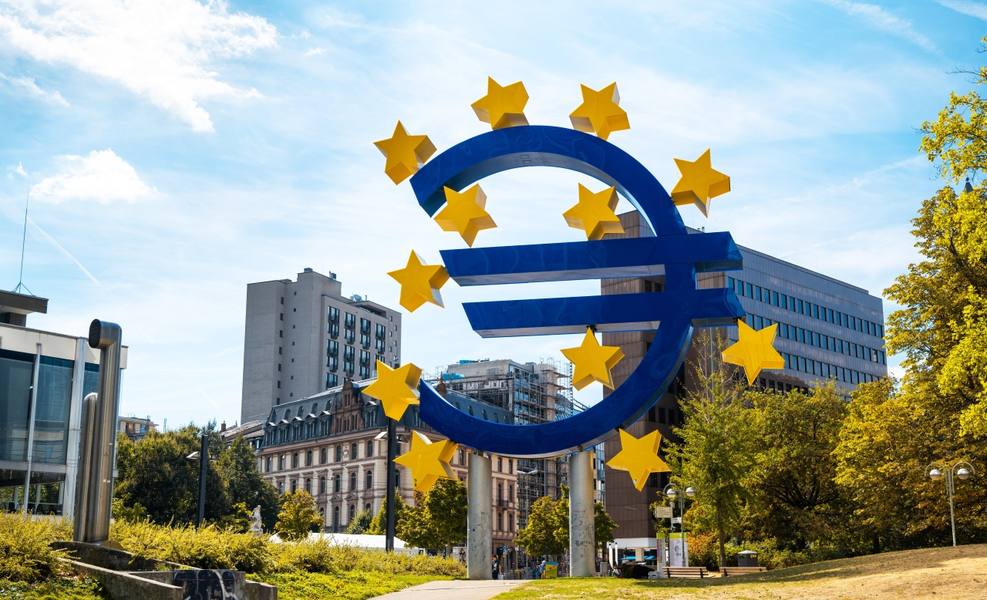
The euro remains one of the world’s leading reserve currencies.
Innovation and education
Europe retains a strong position in science, engineering and research.
What awaits the EU economy in the coming years
Experts agree that the European Union is entering a period of profound transformation.
In the coming years, the key areas will be:
- digitalization of the economy;
- artificial intelligence;
- energy independence;
- development of hydrogen energy;
- industry support;
- Enhancing technological sovereignty.
Europe’s main challenge is to remain competitive in a world where economic strife between major powers is becoming increasingly fierce.
The economy of the European Union is experiencing a period of serious tests, but it is premature to talk about its weakening. The EU remains one of the largest economic centers in the world with a strong industrial base, developed infrastructure and a huge internal market.
Today, Europe is at a crossroads. How successfully it adapts to new energy, technological and geopolitical realities will determine its place in the global economy in the coming decades. But it is already clear that the European Union remains the most important player in the global market and one of the key centers of economic development of the XXI century.