Everyone deserves mercy: how Caritas in Siberia has been helping people for 35 years
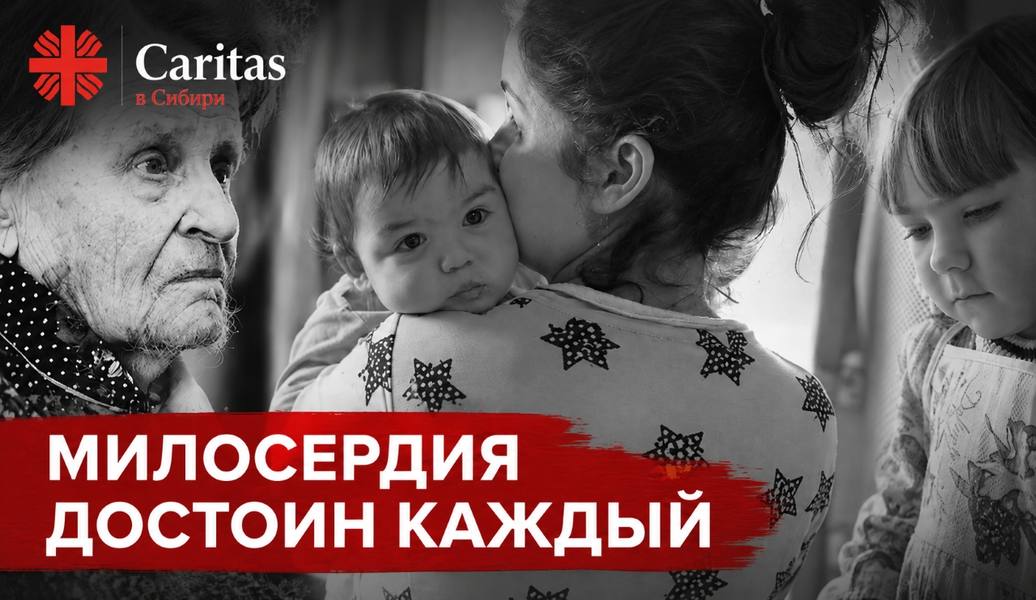
Over more than three decades, Caritas has created a range of programs that address specific social challenges.
When Charity Becomes a Helping System
Charity is often referred to as a one-off help: to collect things, transfer money, support a person in a difficult moment. But there are organizations that have been building a whole system of social support for decades, helping people not only survive the crisis, but also return to a full life.
Caritas Catholic Center is a charitable organization that has been working in Siberia for thirty-five years and helps thousands of people regardless of their nationality, religion and life circumstances.
Today Caritas brings together employees, volunteers, social services, educational programs and international experience in helping people in difficult life situations.
What is Caritas?
The word “Caritas” in Latin means “mercy” or “sacrificial love”.
Caritas is one of the largest charitable networks in the world and is part of the international confederation Caritas Internationalis, which operates in 154 countries and regions.
In Russia, the organization began its activities in the early 1990s, when the country was experiencing large-scale economic and social changes.
In 1991, Caritas of the Transfiguration Diocese was established in Novosibirsk, which became the focal point of social work in the territory from the Urals to the Krasnoyarsk Territory.
Over the years, the organization has gone from humanitarian aid to the creation of professional social programs aimed at supporting the most vulnerable categories of the population.
How it all started.
The early 1990s were a difficult period for millions of Russians.
Economic reforms, rising unemployment, declining living standards and a lack of social support have pushed large numbers of people below the poverty line.
In those years, Caritas’ activities focused primarily on providing humanitarian assistance to those in need.
However, over time, it became clear that financial assistance does not solve all problems.
The consequences of social disadvantage began to come to the fore:
- homelessness;
- domestic violence;
- alcoholism and drug addiction;
- social orphanhood;
- poverty of families with children;
- Lack of care for seriously ill people.
Thus, humanitarian support gradually transformed into a comprehensive system of social projects.
Main areas of work
Over more than three decades, Caritas has created a range of programs, each addressing specific social challenges.
Helping the homeless and people in crisis
The Social Service for Homeless and Needy People has been operating since 1991.
Our job is not just to provide food, clothing or temporary support. Much attention is paid to the restoration of documents, the search for housing, social adaptation and the return of a person to an independent life.
Support for mothers and families
Since 1996, the organization has been developing mother cloisters and family support centers.
Support is provided to women in difficult life situations, pregnant women, young mothers and families who need the help of specialists.
The work is aimed at preserving the family, preventing social orphanhood and creating a safe environment for children.
Kids' clubs
One of the most important projects is the Children’s Clubs, which have been operating since 2005.
These centers help children from low-income and disadvantaged families.
Here the child can get:
- educational assistance;
- support of teachers and psychologists;
- the opportunity to participate in creative and educational programs;
- A safe space for communication and development.
Over the years, the specialists of Children’s Clubs have accumulated significant social and pedagogical experience, which is used today in the development of new programs to support children and adolescents.
The AML programme
Since 2005, Caritas has been implementing the ABO program.
The project helps relatives and specialists to master modern methods of care for seriously ill people.
This support is especially important for families who care for elderly relatives or people with serious illnesses.
The program includes consultation, training and dissemination of practical knowledge to improve the quality of life of patients and their loved ones.

Who does Caritas help?
Over the years, the circle of beneficiaries has significantly expanded.
Today, assistance is being provided:
- families with children;
- adolescents;
- elderly persons;
- people with disabilities;
- seriously ill patients;
- homeless;
- patients with tuberculosis;
- migrants;
- victims in emergency situations.
Each program is built around the specific needs of a person and is aimed at solving not only current problems, but also the causes that led to a crisis situation.
People who help
One of Caritas’ main values is people.
Today, about 100 employees work in the offices of the organization in Western Siberia. Permanent volunteers are also involved.
About 200 volunteers are involved in social initiatives of the Catholic parishes of the region.
It is the combination of professional social work and volunteer participation that allows the organization to maintain efficiency and flexibility even when implementing large-scale projects.
International experience and modern social technologies
As part of Caritas Internationalis, the organization has access to the world’s best social work practices.
This makes it possible to introduce modern methods of accompanying families, supporting children, caring for the sick and working with people in crisis situations.
International cooperation helps not only to exchange experience, but also to introduce new social technologies that have proven their effectiveness in different countries of the world.
The Apostle Hostel - social project for guests of Novosibirsk
One of Caritas’ interesting projects in Novosibirsk was the Apostle Hostel.
It is designed to accommodate up to 32 people at a time and offers comfortable conditions for students, travelers, athletes, patients of medical institutions and people coming to the city for work.
Guests are available:
- cozy rooms;
- equipped kitchen;
- rest area;
- round-the-clock open chapel of the Virgin of tireless help.
Revenues from such projects help support the organization’s social programs and expand opportunities to help those in need.
Help regardless of views or beliefs
One of the principles of Caritas is openness.
The organization helps people regardless of their nationality, religious affiliation, political views and worldview.
As noted by the President of Caritas of the Transfiguration Diocese Bishop Joseph Vert:
“The basis of our social service is love for God and people. Helping those in need is an essential sign of a genuine Christian life.”
This principle has been the foundation of the organization’s work for more than three decades.
Why Caritas' activities remain relevant
Despite the development of state social programs, the need for charitable organizations remains high.
Every day, thousands of people face situations in which not only material assistance is needed, but also human participation, professional support and support.
Caritas shows that charity can be a long-term aid system that helps people overcome crises, maintain dignity and find the strength to move on.
For more than 30 years, the organization has helped thousands of families, children, the elderly and those in difficult life situations.
It is these projects that become examples of how charity can turn into real social change and make society more human.
You can get acquainted with the projects, activities of the organization and make a donation on the official website https://sibcaritas.ru/en/

