Why farmers are raising prices for grain residues: deficits, exports and rising costs
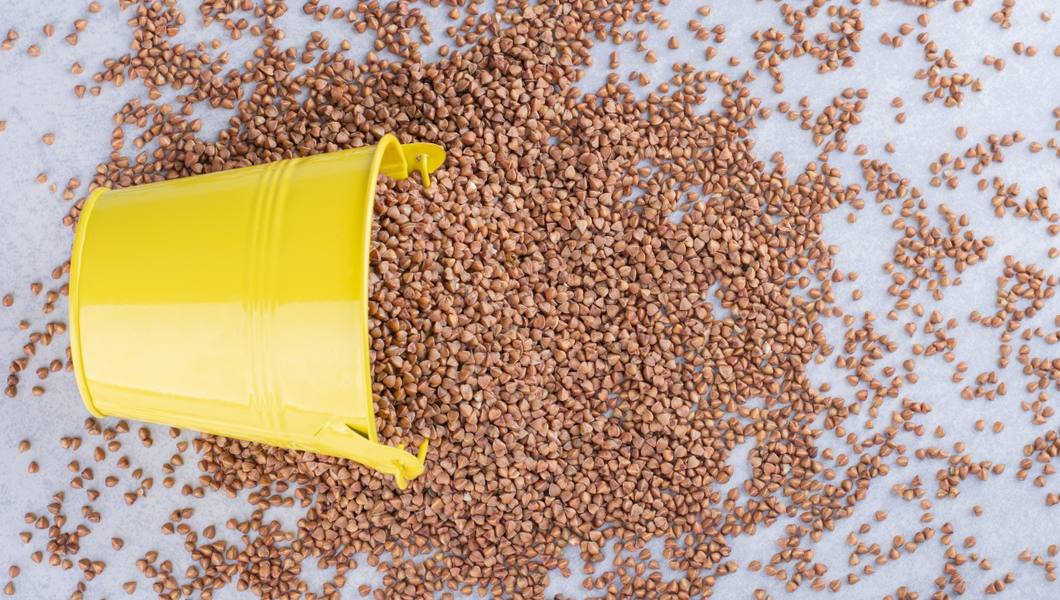
By the end of the season, the market faces a completely different situation: there are more people willing to buy than ready to sell.
A few years ago, many market participants were sure that the closer the new harvest, the cheaper should become the remains of the previous season. The logic seemed simple - warehouses need to be vacated, a new harvest is on the way, which means sellers should be ready to give in.
However, the modern agricultural market is increasingly operating in the opposite scenario.
By the end of the season, the last batches of grain, oilseeds and other agricultural products often begin to rise in price. Buyers are faced with the fact that farmers not only do not reduce prices, but also can choose between several applicants for the same volume of goods.
From the outside, it looks like an artificial overstatement. In practice, the situation is much more complicated. Behind the rise in prices are real economic reasons: reduced supply, rising production costs, expensive loans, export demand and the struggle of business to survive in an ever-increasing cost.
When crop residues become a strategic commodity
After a harvest campaign, the market usually goes through a period of maximum supply.
Within a few months, thousands of farms simultaneously sell crops, elevators are full, and buyers can choose from a variety of suppliers. It is during this period that prices are often under pressure from a large volume of products.
But then begins the gradual reduction of stocks.
Part of the crop is exported, part is processed domestically, part is reserved by large agricultural holdings and traders. Every month there is less free goods.
By the end of the season, the market faces a completely different situation: there are more people willing to buy than ready to sell.
For processing companies, this is particularly sensitive. Flour mills, feed mills, food companies and exporters cannot simply stop work before the new harvest. They need raw materials here and now.
As a result, the last remains begin to acquire special value.
In essence, grain is no longer just agricultural produce and becomes a limited resource to compete for.
Why sales are starting to look like auctions
In autumn, the farmer often looks for a buyer.
In spring and summer, the situation can turn in the opposite direction.
There is a kind of auction model on the market. Several companies are ready to purchase the same batch of grain at once.
Competition is not just about price.
Buyers are beginning to offer additional benefits:
- faster payment;
- self-exportation of products;
- Minimum deadlines for registration of documents;
- long-term contracts for future deliveries;
- favorable logistics conditions.
In this situation, the farmer is able to choose the most attractive offer.
From a business point of view, this is an absolutely rational model of behavior. If the goods become scarce, the seller seeks to sell it on the most favorable terms.
Especially after a season that could be tough.
Why do so many people talk about “minus work”?
When it comes to agricultural prices, many people only estimate the cost of selling the crop.
However, one ton of grain hides a huge amount of costs, which continue to grow almost annually.
Modern crop production depends on dozens of factors:
- the cost of seeds;
- fertilizer;
- plant protection products;
- fuel;
- agricultural machinery;
- spare parts;
- lease of land;
- salaries of employees.
At the same time, the increase in costs is not always compensated by the increase in purchase prices.
In some periods, some crops are on the verge of profitability. Some farms retain profits solely due to the scale of production, and small farms are forced to literally count every penny.
That is why the last batches of products become an opportunity to partially compensate for the lost income for the entire season.
For many manufacturers, this is not an attempt to earn superprofits, but a way to maintain the financial stability of the business.
Expensive loans are changing the economy of agribusiness
Agriculture has long ceased to exist solely at its own expense.
Most farms use credit for sowing campaign, purchase of equipment, purchase of fertilizers and replenishment of working capital.
High interest rates directly affect the cost of production.
In fact, the farmer pays not only for the production of the crop, but also for the cost of money that was raised for its cultivation.
If the crop is stored for several months after harvesting, the costs continue to accrue:
- interest on loans;
- storage on elevators;
- maintenance of warehouses;
- product insurance;
- Additional logistics costs.
Therefore, the decision to hold off part of the crop until a more favorable period is often not due to speculation, but to the need to compensate for financial costs.
Logistics becomes one of the main factors of price
Until a decade ago, transportation costs were rarely a key topic of discussion on the agricultural market.
Today, the situation has changed.
Russia remains the largest country in the world, and major manufacturing regions are often thousands of kilometers away from ports, processing plants and export terminals.
The rising cost of transportation has a huge impact on the market.
This is especially true in regions far from export infrastructure.
Even a small increase in transportation costs can change the economics of the transaction and affect the final price of products.
Therefore, in modern conditions, logistics has long become not an auxiliary process, but a full-fledged element of cost.
How the exchange rate affects the price of grain in the country
Many believe that the exchange rate is only for exporters.
In practice, the impact is much wider.
Even if the farm works exclusively for the domestic market, it faces the consequences of fluctuations in the rate through the cost of machinery, components, fertilizers and plant protection products.
In addition, the change in the rate affects the attractiveness of exports.
When world prices become more profitable in terms of rubles, Russian products begin to actively go abroad.
This automatically reduces the supply in the domestic market.
The less free goods remain inside the country, the higher the probability of rising prices.
Exports dictate the rules of the domestic market
Russian grain has long been part of global trade.
Today, domestic prices largely depend on the situation in world markets.
As international demand grows, exporters begin to buy more from farmers.
There is additional competition for volumes.
As a result, even farms that have never exported themselves benefit from high external demand.
In fact, the global price becomes a benchmark for the entire industry.
That is why the growth of export activity is often accompanied by an increase in the cost of products domestically.
The fight is not only for the goods, but also for a reliable buyer.
It is interesting that today farmers choose a buyer not only at the maximum price.
The market is becoming more mature and reliability issues are becoming more important.
Manufacturers are increasingly assessing:
- payment discipline of the company;
- reputation of the counterparty;
- speed of calculations;
- readiness to implement agreements;
- stability of long-term cooperation.
Sometimes a farmer is willing to sell products a little cheaper to a trusted partner, if you are sure of timely payment and the absence of risks.
Therefore, the modern agricultural market is not just competition for goods, but competition for trust.
What to expect in the coming years
Most of the factors affecting the cost of agricultural products will remain important.
Rising production costs, development of export infrastructure, high financing costs and digitalization of the industry will continue to shape prices.
At the same time, the role of the last crop residues is likely to become even more noticeable.
The more actively exports develop and the higher the competition for quality raw materials, the more value limited volumes of products will acquire at the end of the season.
Outcomes
The rise in prices for leftover grain and agricultural products is not an accident or the desire of farmers to profit from shortages. This is the result of the complex economy of modern agribusiness.
As supply dwindles and costs continue to rise, the last batch of crops becomes a strategic resource. Price is influenced by logistics, credits, fuel costs, exchange rate and global demand.
Therefore, by the end of the season, the market is increasingly operating according to the laws of auction: buyers compete for a limited product, and farmers choose the most profitable and reliable terms of cooperation. And this competition becomes one of the main factors in the formation of prices in the agricultural market.