When the grain doesn't leave
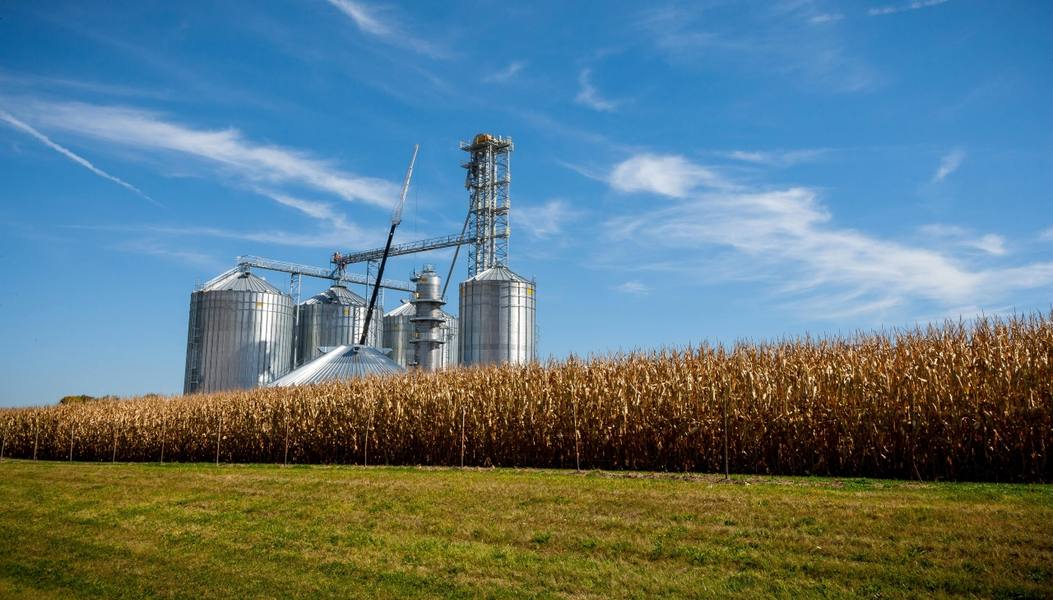
Clogged elevators, waiting for a “boom” of purchases and bottlenecks on the Trans-Siberian Railway
Siberian and Ural elevators today are increasingly working at the limit of capacity. Grain is available, contracts are being negotiated, South Asian markets are showing interest - But shipping is slowing down.
A paradox is formed in the market: farmers are waiting for a “boom” of purchases, traders are counting on rising prices, and infrastructure is gradually resting on the ceiling.
The problem of clogged elevators - It's not just a question of harvest. This is the result of a combination of logistical and administrative factors, including restrictions in the coordination of export GU-12s to the east.
Let's look at the key reasons.
Artificial reduction of export GU-12 in the Eastern direction
One of the reasons market participants are talking about more and more - reduction in the volume of approval of export applications to the countries of South Asia through the Eastern landfill.
We are talking about a situation where the actual infrastructural possibility of shipment exists, but the volume of coordination through the West Siberian region is decreasing.
As a result:
- The grain physically remains on the elevators.
- A loading queue is formed,
- Traders postpone active purchases.
- The market freezes in anticipation of expanding the limits.
If export GU-12s in a particular direction are limited, the flow begins to accumulate at the point of departure. - I mean, Siberia.
Competition of nomenclatures on the Trans-Siberian Railway
Trans-Siberian Railway - It's not just grain. These are coal, containers, metal, fertilizers, petrochemicals.
With limited capacity, the system redistributes priorities. And often the grain is in competition with:
- export coal,
- container transit,
- strategic industrial cargoes.
Even a temporary shift in priorities can trigger a chain reaction:
- Decreased coordination.
- Slowing out.
- Filling linear elevators.
- Stopping purchasing activity.
Expectation of rising prices and the “pause effect”
There is also a market component.
When market participants expect:
- rising world prices,
- weakening of the ruble,
- Expansion of export quotas,
- increase in transportation subsidies,
They take a wait-and-see attitude.
Traders are not in a hurry to actively buy, farmers keep the volume, logistics slows down.
Elevators are starting to work as a temporary storage warehouse in anticipation of a better sales window.
Shortage of rolling stock in peak season
During the period of active grain export there is competition for grain carriers and traction.
Even if there is an agreed application, there may be:
- delays in wagon delivery,
- inconsistency between operator and station
- Redistribution of the park to higher priority areas.
A delay of even 5-7 days in peak season leads to the accumulation of thousands of tons on linear elevators.
Restrictions on port approaches
Even if the grain goes to the highway, the bottleneck can be:
- port terminals,
- approach stations,
- weather factors,
- Overloading of export infrastructure.
If the port reduces reception, this automatically affects the approval of the new GU-12. The system will not confirm volumes that are physically impossible to unload.
Administrative Factor and Manual Regulation
During periods of high load, the transport management system can switch to manual control mode.
This is expressed in:
- redistribution of quotas between regions,
- temporary decrease in volumes on individual highways,
- adjustment of export limits.
For the market, this looks like an “artificial constraint”, even if it is formally explained by balancing the carrying capacity.
Why the problem is focused on the Trans-Siberian
Trans-Siberian Railway - strategic corridor.
Going through her:
- Oriental exports,
- container transit,
- commodity flows,
- domestic transportation.
Any restriction in this direction instantly affects Western Siberia and Altai.
Unlike the southern regions, Siberian shippers have fewer alternative export routes.
Market implications
Clogged elevators create a domino effect:
- farmers freeze working capital;
- the speed of calculations decreases;
- Traders are careful with contracts.
- the rate of purchases in farms decreases;
- There is nervousness in the market.
With prolonged restrictions, this could lead to dumping within the region.
Possible development scenarios
In the short term, the situation can develop according to three scenarios:
1. Extension of GU-12 limits
Unloading elevators and a sharp spike in loading.
2. Redistribution of nomenclatures
Reducing the priority of other goods in favor of grain.
3. Maintaining restrictions
Increased inventory and increased pressure on purchase prices.
The reasons for clogged elevators on the Trans-Siberian Railway are complex.
Among them:
- reduction of coordination of export GU-12 in the eastern direction,
- competition for carrying capacity,
- market wait-and-see attitude,
- shortage of rolling stock,
- limitations of port infrastructure,
- administrative redistribution of limits.
It's not just the harvest. It is a question of balance between infrastructure, export policy and logistics management.