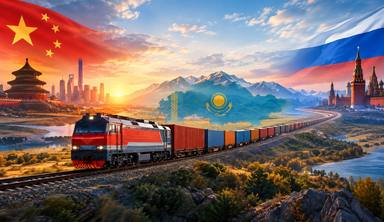
Agroexport to BRICS countries: where the most promising markets are now opening
BRICS countries become one of the main drivers of global economic growth and international food trade
World trade is going through a period of massive change. Traditional export destinations are gradually complemented by new markets, and the BRICS countries are becoming increasingly important players in the global economy and international food trade.
For Russian farmers, this opens up new opportunities for the export of grain, oilseeds, processed products and other agricultural products.
The expansion of the BRICS and the growth of domestic consumption in many member countries are creating a steady demand for imported food. That is why more and more manufacturers and exporters consider these markets as a strategic direction of business development.
Why BRICS countries are becoming increasingly important for agricultural exports
Today, the BRICS countries unite a significant part of the world’s population, the largest emerging economies and fast-growing consumer markets.
Increasing incomes, urbanization and increased food consumption lead to a constant increase in demand for agricultural products.
At the same time, many states are not able to fully meet domestic needs at the expense of their own production and are actively developing food imports.
For exporters, this means new opportunities for long-term cooperation.
Which products are most in demand
In the markets of the BRICS countries, demand for:
- wheat;
- barley;
- corn;
- legume crops;
- sunflower oil;
- rapeseed oil;
- soy products;
- feed components;
- products of deep processing of grain.
The demand for high value-added products is growing especially rapidly, which opens up additional opportunities for manufacturers and processors.
China: the largest agro-import market
Why China remains a priority n
China has been one of the largest importers of agricultural products in the world for many years.
Urban population growth, changing consumption patterns and livestock development support high demand for imported raw materials and food.
Of particular interest to the Chinese market are:
- crops;
- oilseeds;
- feed components;
- vegetable oils;
- processed products.
Opportunities for Russian exporters
The proximity of the border, the development of transport infrastructure and the expansion of trade cooperation make China one of the most promising destinations for Russian manufacturers.
However, working with the Chinese market requires serious preparation, including product certification, compliance with phytosanitary requirements and thorough verification of counterparties.
India: a huge market with growing consumption
Why you should pay attention to India
India is one of the fastest growing economies in the world and continues to increase food consumption.
Population growth and changing dietary patterns create additional demand for various types of agricultural products.
Promising directions
The most interesting for export may be:
- vegetable oils;
- crops;
- feed components;
- processing products.
Despite the high potential of the market, it is important for exporters to take into account the peculiarities of Indian regulation and local trade practices.
Brazil: not only a competitor, but also a partner
At first glance, Brazil is perceived exclusively as a competitor of Russia in the global agricultural market.
There are also prospects for mutual trade between countries.
In some areas, demand:
- fertilizer;
- feed additives;
- certain types of processing products;
- Specialized agrotechnological solutions.
In addition, cooperation with Brazilian companies can open up opportunities to enter Latin American markets.
Egypt: one of the key grain importers
With the expansion of the BRICS, Egypt is becoming an even more interesting destination for Russian exporters.
The country remains one of the world’s largest importers of grain crops.
The main advantages of the market
- high volume of purchases;
- sustainable demand;
- developed import infrastructure;
- Many years of experience with Russian suppliers.
For grain producers, Egypt remains one of the most important markets.
UAE: logistics and trade hub of the region
The United Arab Emirates plays a special role in international trade.
The country is not only the final consumer of products, but also the most important distribution center for supplies to the Middle East, Africa and South Asia.
For exporters, cooperation with companies from the UAE can be a way to enter several markets at once.
Ethiopia: The Market of the Future
Ethiopia is rarely the focus of exporters’ attention, but it is these markets that often become growth points in the long run.
Rapid population growth and food needs create high potential for increasing agricultural imports.
Despite existing infrastructure constraints, interest in the market is gradually growing.
What makes BRICS markets particularly attractive
Population growth
Most countries continue to increase their population and food consumption.
Development of the middle class
Increased income leads to increased demand for quality food.
Strengthening trade cooperation
The BRICS countries are actively developing economic ties and mutual settlements mechanisms.
Long-term potential
Unlike many mature markets, the BRICS countries retain a high potential for further consumption growth.
What difficulties should be considered
Entering new markets requires training and resources.
The most common difficulties are:
Certification and approval of products
Each country has its own requirements for imported products.
Logistics
It is important to consider:
- transport routes;
- cost of delivery;
- time of carriage;
- Characteristics of port infrastructure.
Finding reliable partners
The choice of importer or distributor remains one of the key factors for successful market entry.
Currency and financial risks
Mechanisms for calculating and insuring export operations should be worked out in advance.
How farmers can start entering the BRICS markets
Examine demand
It is necessary to understand:
- what goods are in demand;
- What volumes are purchased;
- What are the requirements for the products?
Preparation of export documentation
It is important to ensure that products meet the requirements of the destination country in advance.
Find local partners
Local distributors and importers help to adapt to the market more quickly.
Participate in international exhibitions
Industry events remain one of the best tools for finding buyers and establishing business ties.
Working for the future
In many BRICS countries, relationships and trust are just as important as product prices.
Conclusion
BRICS countries are becoming one of the main drivers of global economic growth and international food trade.
For Russian farmers, this opens up new opportunities for expanding exports, reducing dependence on individual markets and forming a long-term business development strategy.
China, India, Egypt, the United Arab Emirates and a number of other countries are already demonstrating high demand for imported agricultural products, and further development of cooperation within BRICS can make these areas even more important for Russian agricultural exports.
Companies that are beginning to explore and explore these markets now have the opportunity to take a stronger position in the future.