Regional autonomy of dairy farming: protecting farmers or risking the market
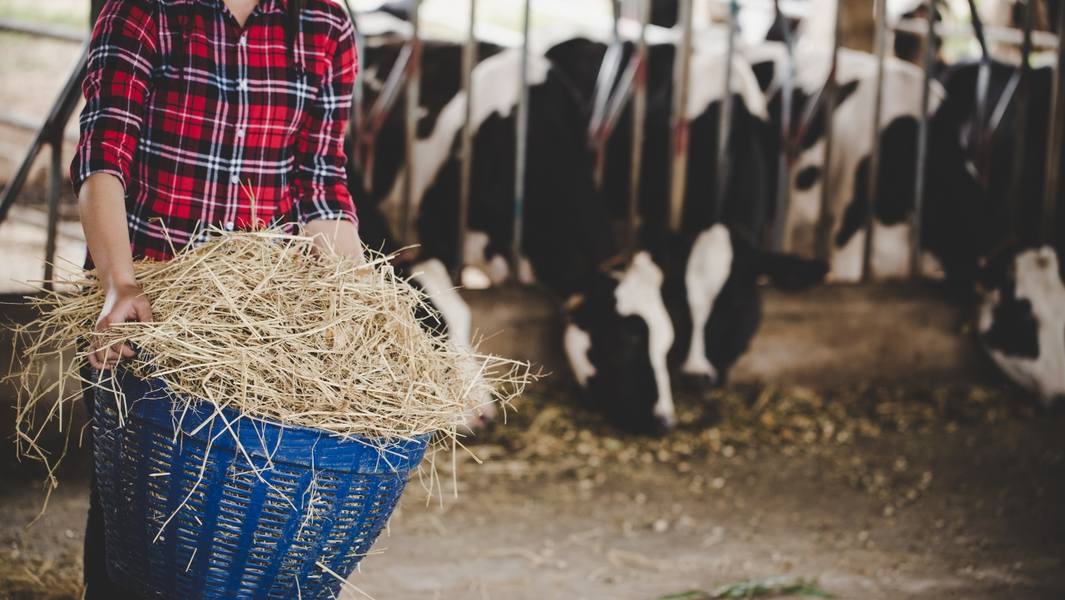
When store shelves are occupied with products of federal brands, it is difficult for small farms to compete.
The Russian dairy industry is undergoing a period of serious transformation. On the one hand, the state actively supports the development of agriculture and strives to improve the food security of the country. On the other hand, many regions are increasingly thinking about how to protect their producers from competition from larger players from neighboring regions of the Russian Federation.
Against this background, the idea of the so-called regional autonomy of the dairy market periodically arises, in which each subject of the federation relies primarily on its own producers and limits the penetration of products from the outside.
How realistic is this model? What are the benefits and risks it brings? Is it capable of sustainable development of dairy farming?
Let's take a closer look.
What is meant by regional autonomy
In a simplified form, the concept is as follows.
Each region:
- develops its own dairy production;
- Supports local farms;
- stimulates processing within the region;
- creates conditions for the sale of products of local producers;
- reduces dependence on supplies from other subjects of the Russian Federation.
Proponents of this approach believe that the region should provide for itself as much as possible:
- milk;
- cheeses;
- butter;
- dairy products;
- ice cream;
- baby food.
That is, to form its own closed chain of production and consumption.
Why this question becomes relevant
The Russian dairy market is extremely heterogeneous.
There are leading regions:
- Tatarstan;
- Krasnodar region;
- Voronezh region;
- Belgorod region;
- Udmurtia;
- Bashkortostan.
And there are territories that are still heavily dependent on supplies from outside.
The result is a situation where large producers can supply products almost throughout the country, displacing small local farms.
For regional farmers, this is often a major problem.
Arguments of supporters of regional autonomy
1. Support for local farmers
When store shelves are occupied with products of federal brands, it is difficult for small farms to compete.
The support of the regional manufacturer allows:
- to preserve jobs;
- Retain the population in rural areas;
- encourage the development of farming;
- create additional tax revenues to the regional budget.
2. Reducing logistics costs
Dairy products belong to the category of goods with a limited shelf life.
The closer production is to the consumer, the less:
- transportation costs;
- losses during transportation;
- storage costs;
- carbon footprint.
This is especially true for fresh milk and dairy products.
3. Improving food security
Pandemics, sanctions and international crises have shown the importance of local food production.
A region capable of providing basic products on its own is less vulnerable to external shocks.
4. Development of rural areas
Each new farm is:
- jobs;
- infrastructure development;
- Loading of local processing enterprises;
- growth of related industries.
Dairy farming is traditionally considered one of the key drivers of the rural economy.
Why full autonomy can be dangerous
Despite the attractiveness of the idea, economists warn of serious risks.
1. Violation of competition
Competition forces manufacturers to:
- improve quality;
- introducing new technologies;
- reduce the cost;
- Work on the service.
If the regional market is artificially closed, producers may lose the incentive to develop.
2. Rising prices for consumers
If only local suppliers remain in the market, buyers lose their choice.
Lack of competition often leads to higher product costs.
As a result, the end user suffers.
3. Different climatic conditions
Russia is a huge country.
Some regions are objectively more suitable for the development of dairy farming.
For example:
- availability of a feed base;
- climate;
- accessibility of land;
- the cost of electricity.
Therefore, it is impossible and economically impractical to completely abandon interregional trade.
4. Deficit risks
Failure of feed crops, animal diseases or economic problems can drastically reduce production in a particular region.
In this situation, supplies from other entities become the most important mechanism for stabilizing the market.
Is a middle ground possible?
Most experts believe that the most effective is not isolation, but a reasonable balance between supporting local producers and an open market.
The region may:
- provide subsidies to local farms;
- help with the modernization of farms;
- develop cooperatives;
- stimulate processing within the region;
- Promote local brands.
At the same time, the possibility of free competition and supplies from other subjects of the Russian Federation remains.
What technologies are changing dairy farming
Modern dairy production is less and less dependent on the number of workers.
Today, the key role is played by:
- robotic milking;
- Digital control of animal health;
- automation of feeding;
- herd monitoring systems;
- Artificial intelligence to predict productivity.
Technological efficiency becomes the main factor of competitiveness.
Therefore, the future of the industry largely depends not on administrative constraints, but on the level of automation and investment.
What this means for investors
Dairy farming remains one of the most sustainable sectors of the agro-industrial complex.
The most interesting projects today are in the areas of:
- robotic farms;
- milk processing;
- cheese production;
- deep processing of dairy products;
- Digitalization of agriculture;
- genetics and breeding.
Particularly promising are the regions where the authorities actively support the development of local agriculture.
The idea of regional autonomy in dairy farming looks attractive in terms of supporting local producers and food security.
However, the complete closure of markets between regions can lead to less competition, higher prices and a slowdown in the development of the industry.
Such a balance can ensure the steady growth of Russian dairy farming in the coming decades.