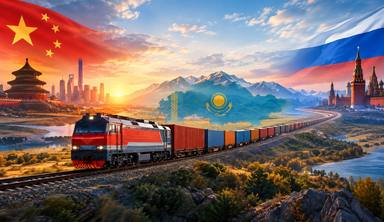
Why farmers need to diversify their export markets

Diversification works on the same principle as an investment portfolio: the more independent sources of income, the more sustainable the business.
The global agricultural market is becoming increasingly dynamic and unpredictable. Changes in trade policies, logistics restrictions, sanctions, exchange rate fluctuations and changes in demand in individual markets can significantly affect export deliveries in a short time.
For many agricultural producers and exporters, depending on one or two key buyers has long seemed like a comfortable and profitable strategy. However, the practice of recent years has shown that a high concentration of sales in one market can create serious risks for businesses.
That is why the diversification of export destinations becomes not just an opportunity for growth, but an important element of the sustainability of an agricultural company.
What is diversification of export markets?
Export diversification is the distribution of supplies between several countries and regions, rather than focusing on one large buyer.
If a company sells all its products to one country, it depends entirely on its economic situation, trade policy and domestic demand.
When supply is distributed across multiple markets, risks are greatly reduced.
In essence, diversification works on the same principle as an investment portfolio: the more independent sources of income, the more sustainable the business.
Why a single-market dependency becomes dangerous
Trade policy changes
Even long-term trade relations do not guarantee the stability of working conditions.
States may:
- introduce new product requirements;
- change import duties;
- limit the supply of certain goods;
- Review the certification rules.
For an exporter, this could mean losing the market in a matter of months.
Political risks
International relations directly affect foreign trade.
Political changes can lead to:
- limitation of payments;
- complication of logistics;
- changes in the rules of import of products;
- Decrease in procurement volumes.
The more markets a company has in its export portfolio, the easier it is to compensate for these changes.
Fluctuations in demand
Even in a stable political environment, demand for agricultural products may change.
It's influenced by:
- yield within the importing country;
- economic situation;
- level of consumption;
- Changing the preferences of buyers.
If an exporter operates in only one market, a decrease in demand is immediately reflected in revenue.
Diversification as a tool to increase profits
Many companies see entering new markets as a way to reduce risk. However, diversification can bring additional profit.
Different markets - price
The cost of the same product can vary significantly depending on the country of destination.
For example:
- There is a higher demand for food grain in one country.
- c the other - on feed crops;
- Third, customers are willing to pay a premium for certain product characteristics.
Working with several markets allows you to choose the most profitable directions of supply.
Ability to redistribute volumes
If prices in one market decline, some of the products can be sent to other countries.
This gives the exporter greater flexibility and reduces dependence on the situation of a particular region.
Which markets are most promising today?
In recent years, the world map of agricultural exports has changed significantly.
Of particular interest to Russian manufacturers are:
China
One of the world’s largest food importers.
Demand remains for:
- crops;
- oilseeds;
- products of processing;
- feed components.
Middle East countries
The region actively imports agricultural products due to its limited resources.
High demand remains for:
- grain;
- vegetable oils;
- feed;
- food.
Africa
One of the fastest growing markets in terms of population and food consumption.
Many countries in the region are interested in long-term supplies of grain and processed products.
BRICS countries
The expansion of cooperation within the association opens up new opportunities for agro-exports.
Many BRICS members are interested in diversifying food suppliers and developing trade relations.
What difficulties arise when entering new markets
Diversification requires training and resources.
The most common difficulties are:
Certification and permits
Each country has its own requirements for imported products.
Consideration should be given to:
- phytosanitary requirements;
- certificates of conformity;
- veterinary documents;
- marking requirements.
Logistics
New directions require revision of routes and calculation of cost of deliveries.
It is important to consider:
- transportation costs;
- availability of ports;
- delivery time;
- cost of transshipment.
Finding partners
Entering a new market almost always starts with finding reliable importers and distributors.
Mistakes at this stage can lead to financial losses and disruption of supplies.
How to Start Diversifying Export Sales
Analyze current risks
It is important to evaluate:
- What percentage of sales are in each market?
- how much the company depends on specific buyers;
- What are the risks in the main areas of supply?
Explore promising countries
Before entering a new market, it is necessary to analyze:
- volume of imports;
- product requirements;
- level of competition;
- Logistical opportunities.
Prepare documents in advance
In many cases, the registration of permits takes a considerable time.
Preparation of documents before the start of negotiations allows faster delivery.
Participate in international exhibitions
Industry events remain one of the most effective tools for finding new buyers and partners.
Use government support measures
Many countries have export support programmes, including advice, cost reimbursement and assistance in finding partners.
Why Diversification Can No Longer Be Delayed
Global trade is becoming less predictable.
Companies that start looking for new markets only after problems in the current direction often face a shortage of time and resources.
On the contrary, manufacturers that build relationships with multiple markets in advance gain more opportunities for growth and are better able to adapt to environmental changes.
Diversification is not a response to a crisis, but a strategic tool for business development.
Conclusion
For modern agrarian business diversification of export markets becomes one of the key factors of sustainability and competitiveness.
Working with several countries at once allows you to reduce commercial risks, flexibly respond to changes in the global market, increase supply margins and create additional growth points.
Companies that are already beginning to expand their export geography are gaining a major advantage in a rapidly changing global economy.