Crop monitoring and bureaucracy in Russian agriculture: what to consider before the harvest of 2026
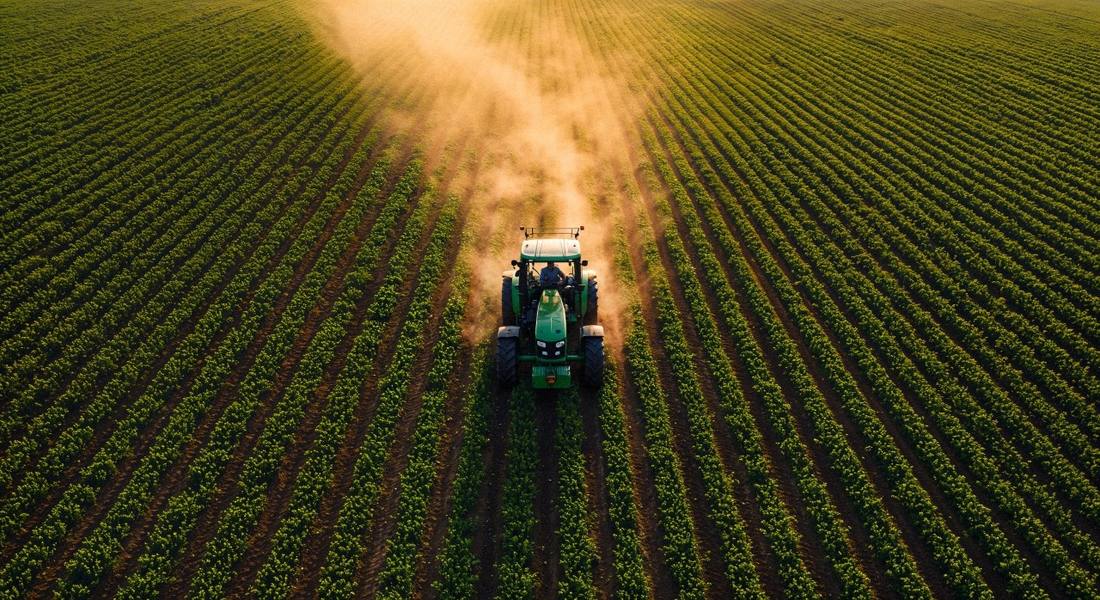
By the beginning of the 2026 harvest season, farmers and agricultural holdings have to take into account not only the sowing campaign, but also a large amount of administrative and digital requirements.
Modern agriculture has long ceased to be an industry where the result depends solely on weather, technology and seed quality. Today, the agricultural sector is gradually turning into a system where production is closely linked to digital accounting, reporting and government control.
Until a few years ago, many processes were based on paper journals, local documents and internal farm reports. Things are changing now. The state strengthens control over the origin of products, the movement of crops, the use of land and the quality of raw materials supplied.
By the beginning of the 2026 harvest season, farmers and agricultural holdings have to take into account not only the sowing campaign, but also a large amount of administrative and digital requirements.
For agribusiness, this is not just a matter of accountability. The correct accounting of data directly affects the possibility of selling products on the domestic market, participating in export deliveries and passing inspections.
Why the Government Is Increasing Control of the Agricultural Sector
Russian agriculture remains one of the largest participants in the global food market. Exports of grain, oilseeds, plant products and processed products are measured in tens of millions of tons annually.
With such volumes, the importance of transparency of the entire production chain increases.
The state seeks to solve several tasks simultaneously:
- control the origin of products;
- monitor the quality of raw materials;
- reduce the risk of illegal trafficking;
- improve the country’s export reputation;
- Ensure food security.
In addition, the tightening of requirements is associated with international terms of trade.
Many countries require the most detailed information about the origin of products. - from the place of cultivation to the technologies used and the drugs used.
How the crop monitoring system works
Today, control begins long before the harvesting campaign.
In fact, each farm forms a digital picture of the future harvest at the stage of sowing.
Monitoring usually includes:
- the area of land;
- distribution of crops by field;
- timing of sowing;
- types of seeds used;
- information about suppliers;
- application of fertilizers;
- phytosanitary measures;
- estimated yields.
Most of the information is gradually transferred to electronic accounting systems.
With the development of satellite monitoring and geoinformation technologies, government agencies can track land use in almost real time.
Previously, control was often based on random checks, today data analysis is much more automated.
Why Seed Accounting Is More Important
Until recently, many small farms treated the documentation of the origin of seed material quite formally.
But now the situation is changing.
The monitoring system requires that:
- origin of the seeds;
- supplier;
- characteristics of the class;
- certification;
- quality indicators;
- documents of origin.
This is especially important when exporting products.
If a purchasing country requests proof of origin, the entire chain must be transparent.
The lack of necessary data can lead not only to additional checks, but also to the restriction of supplies.
The fields are no longer just land.
In the past, the distribution of crops by plot was often an internal issue of the economy.
Now the field is gradually becoming a digital object of accounting.
For each site can be fixed:
- crop history;
- crop rotation structure;
- soil condition;
- technologies used;
- volumes of fertilizers applied;
- yields from past seasons.
This approach solves several problems at once.
First, it helps to increase production efficiency.
Secondly, it allows you to quickly confirm the origin of products during inspections.
Thirdly, it simplifies work with export supplies.
Why domestic products and exports are different
Many farmers are faced with the fact that grown products may have different requirements depending on the direction of implementation.
For the domestic market, requirements are usually limited to basic safety standards, certification and mandatory reporting.
However, exports often involve additional conditions.
For example, foreign buyers may consider:
- residual indicators of drugs;
- origin of the seeds;
- land history;
- storage conditions;
- phytosanitary indicators;
- Features of production.
For some countries, the requirements are much stricter than Russian standards.
That is why the same batch of products can easily be sold domestically, but require additional procedures for international trade.
Why requirements differ between countries
The global agricultural market is becoming increasingly sensitive to quality and traceability.
For example:
Traditionally, European Union countries pay more attention to environmental requirements and residues.
China is stepping up control over the origin of products and documentation.
Countries in the Middle East often have special phytosanitary requirements.
Asian markets can separately check safety indicators and production methods.
For this reason, the export strategy today begins not in the port or on the elevator, but during the sowing campaign.
Digitalization is changing agriculture
The agro sector is gradually becoming a big data industry.
The following are already actively used:
- electronic accounting bases;
- satellite monitoring;
- geoinformation systems;
- digital field maps;
- automated reporting;
- Product traceability systems.
For large farms, digitalization is becoming a way to manage efficiency.
For small businesses, this is becoming a requirement.
What is important to consider before the harvest of 2026
Farmers find it increasingly difficult to work based on past experience.
Today it is necessary to take into account not only the yield, but also the administrative component.
The key challenges are:
- control of documentation;
- timely updating of data;
- verification of suppliers;
- accounting of the origin of products;
- compliance with the requirements of export markets;
- Digital reporting planning.
Outcomes
Russian agriculture is gradually moving to a new model of work, where production is closely linked to process transparency and digital control.
Crop monitoring, seed accounting, product traceability and the demands of different markets are all part of farmers’ daily work.
Before the harvest of 2026, it is important for farmers to take into account not only the state of the fields and weather forecasts, but also the constantly changing market rules.
For modern agribusiness, competitiveness is increasingly determined not only by the volume of crops, but also by the quality of data.