Which crops will be the most profitable in the next 5 years
If we look not only at current profits, but also at the prospects up to 2030, crops related to processing are particularly interesting.
Russian agribusiness enters the next five years with a fairly clear trend: the demand for agricultural raw materials remains, exports are developing, and the state relies not only on production, but also on processing products within the country.
It is impossible to choose the most profitable culture for all farms. Yields, the cost of seeds and fertilizers, machinery, logistics, climate and the presence of a processor near the field can literally change the economy twice.
Therefore, it is better to look not at the price of a ton, but at Marginality per hectare, demand stability, costs and the ability to sell crops without high logistics costs.
On the horizon of 2026-2030, oilseeds look the most interesting - primarily rapeseed and soybeans, pulses, corn in suitable regions, as well as individual niches of vegetables and special crops. At the same time, the traditional sunflower will remain important, but it no longer looks like the undisputed leader in profitability.
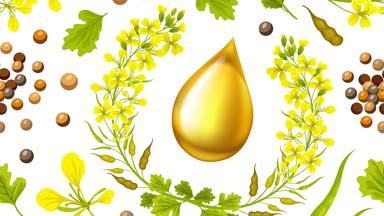
Rape. - major candidate for growth
If you choose a culture that may feel particularly good in the next five years, rapeseed should be at the top of the list.
The reason is the combination of demand from Russian processors and export potential. In 2026, rapeseed crops in Russia reached about 3.8 million hectares, and the harvest of Ruseed analysts is estimated at 7.4-7.8 million tons against about 5.5 million tons a year earlier.
Recycling is also increasing. In the first half of 2026, rapeseed oil production in Russia increased by 21.6%, and rapeseed oil exports reached about 805 thousand tons.
Why canola is interesting to farmers
The main advantage is the presence of several sales channels. The crop can be sold to processors, traders or export-oriented.
Another plus is that rapeseed fits well into crop rotation and allows diversifying the economy, especially if the enterprise already grows grains.
But culture is not simple. It is demanding on technology, timing of sowing and harvesting, and errors can seriously reduce yields.
Who fits: farms with good agricultural equipment, equipment for timely cleaning and a reliable sales channel.
Top risk: High competition for space can gradually increase the cost and reduce margins.
soya - processing-rate
Soya looks like another strong candidate for 2026-2030.
In 2026, the soybean harvest in Russia is projected at 8.6-8.8 million tons, and the average yield is about 20.5-21 c / ha.
The demand for soybeans is formed by several industries at once: the production of vegetable oil, meal, mixed feed and food.
The culture is especially interesting for regions where there is a suitable climate and a developed processing infrastructure.
But there's an important rule here: Do not focus only on the high price of soybeans. It is necessary to consider the yield in your field. Culture can show an attractive economy in one region and another in another.
An additional plus is the development of domestic processing. The state strategy involves increasing the production of oilseeds and at the same time expanding the export of products with higher added value – primarily vegetable oils.
Who fits: regions with a suitable climate, farms with good technological discipline and access to processing.
Top risk: climate dependence and the need to choose carefully.
Sunflower - A reliable but no longer undisputed leader
Sunflower will remain one of the main commercial crops of Russia.
In 2026, about 11.9 million hectares were allocated for it, and the harvest of analysts is estimated at 20.6-21 million tons.
Demand for products remains high, and Russia actively exports not only seeds, but also finished oil.
In the first half of 2026, exports of Russian sunflower oil amounted to more than 2.3 million tons, and export revenues reached about $3 billion.
However, there is a problem: the more farms increase the area, the more culture depends on the prices of raw materials and the capabilities of processors.
Industry experts already note that sunflower has ceased to be equally beneficial for all farms. The economy is affected by the cost of seeds, fertilizers, plant protection products and logistics to the oil refinery.
Therefore, in 2026-2030, it is more correct to consider sunflowers as stable basic cultureNot as a way to get the most out of it.
Who fits: most grain farms of the south, the Volga region, Central Russia and other suitable zones.
Top risk: Market saturation and the need to comply with crop rotation.
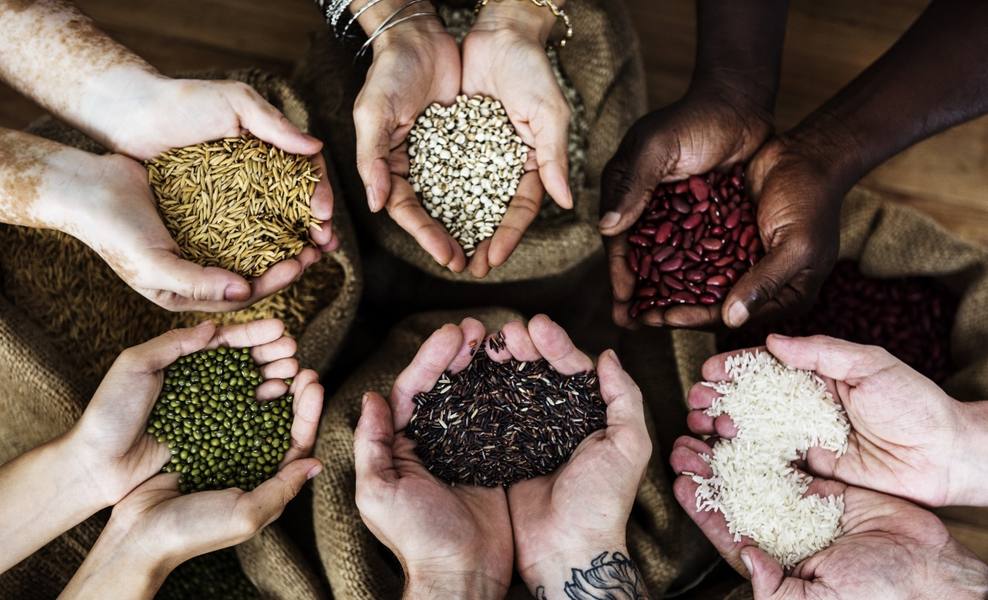
Peas, chickpeas and lentils - niche
Pulses may be one of the most interesting areas of the next five-year plan.
Russian exports of legumes are actively growing: in the first half of 2026, exports of legumes increased by 81% year-on-year and reached about 1.8 million tons.
At the same time, the Ministry of Agriculture predicted for 2026 pea crops at about 2.2 million hectares, chickpeas - 862 thousand hectares, lentils - 766 thousand hectares.
Why is that interesting?
Pulses have export demand, are used in the food industry and at the same time help to build a more competent crop rotation.
Particularly promising may be chickpeasIf there is a buyer or an opportunity to export products.
But these crops have an important drawback: the market can be significantly less predictable than wheat or sunflower. Before sowing, you need to understand to whom and at what price you will sell the crop.
Who fits: farms with access to export channels and regions suitable for climate.
Top risk: Price volatility and limited number of buyers in certain regions.
corn - High profitability with the right climate
Corn can bring a good profit where there is enough heat and moisture.
For 2026, the Ministry of Agriculture predicted sown areas of corn per grain of about 2.68 million hectares and a harvest of about 15.8 million tons. This is significantly higher than the expected harvest of the previous year.
The advantage of culture is a large number of uses. Corn is needed for the production of feed, starch, food and other processed products.
But it is especially important not to transfer the experience of one region to another.
In southern Russia, corn can be a very interesting crop. In an arid zone without enough moisture, the situation is completely different.
Who fits: farms in the south and other regions with sufficient heat and moisture.
Top risk: Drought can severely impact crop yields.
Potatoes and vegetables - High margins, but a very different economy
If we talk not only about large field crops, but also about agricultural business in general, potatoes and vegetables cannot be ignored.
They potentially have much higher income per hectare than cereals. But at the same time, labor costs, storage, sorting, packaging and marketing requirements are much higher.
Therefore, selling potatoes or vegetables “as it turns out” is a bad business model.
Need:
- vegetable store;
- sorting equipment;
- stable buyers;
- contracts with retail chains or processors;
- Well-designed logistics.
If all this is there, vegetable farming can make much more money per hectare than traditional cereals.
If there is no infrastructure, the high price of products easily turns into a big loss.
Who fits: farms and businesses near major cities and markets.
Top risk: perishability and high cost.
Oil flax and mustard - small but interesting niches
Another option for diversification is special oilseeds.
In 2026, the production of oil flax is estimated at about 1.9-2 million tons, mustard - 170-190 thousand tons.
Their advantage is the ability to work in a less mass segment. Unlike wheat or sunflower, you can sometimes get a more interesting price because of the specifics of the final product.
But it is also a major risk.
A narrow market means that you cannot sow first and then look for a buyer. For niche crops, the scheme should be reversed:
first find the market → determine the requirements of the buyer → calculate the cost → only then choose the area for sowing.
Which cultures will grow the fastest?
If you look not only at current earnings, but also at the prospects up to 2030, crops related to recycling are particularly interesting.
The Russian strategy of the agro-industrial complex provides for an increase in production and an increase in exports of agricultural products. At the same time, the state relies on the export of products with higher added value.
This is an important signal for farmers.
Conventionally:
sell the seed well;
Selling oil is potentially more profitable.
Sell the finished product with even more added value.
Therefore, the most promising will not necessarily be the crops with the highest price on the exchange, but those around which a full-fledged processing chain is formed.
What about the wheat?
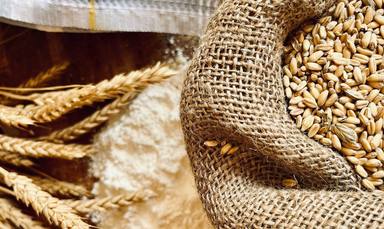
Wheat will not disappear and will remain the foundation of Russian crop production.
Russia retains a huge export potential: by 2030, the Ministry of Agriculture expects an increase in grain exports to about 80 million tons.
But for the individual farmer, this does not automatically mean high profitability.
Wheat is a mass crop with a large number of producers. Therefore, profit here largely depends on the cost, yield and distance to the elevator or export terminal.
Wheat - A good choice for stability, but not necessarily the best choice for maximum margin.
That is why it is more profitable for large farms to build crop rotation from several crops, rather than trying to guess one winner.
How to choose a profitable culture for your farm
The main mistake is to look at the average price of a ton in Russia.
You have to count. hectare.
Simple formula:
Profit per hectare = yield × sale price − all costs.
It is not only seeds and fertilizers that need to be included in the costs.
Consider:
- FSM;
- salary;
- depreciation of equipment;
- repairs
- plant protection products;
- drying
- storage;
- insurance;
- interest on loans;
- lease of land;
- transportation to the buyer;
- taxes;
- Loss of storage.
For example, a culture with a price of 30 thousand rubles per ton is not necessarily more profitable than the one bought for 20 thousand. If the first gives 15 centners per hectare at a high cost, and the second - 35 centners at lower costs, the result will be the opposite.
What to choose in 2026-2030
If you make an indicative rating from the point of view perspectiveInstead of guaranteed profits, this is:
- Rape. Strong demand of processors and export potential.
- soya The growing butter and meal market is particularly promising in suitable regions.
- Pulses Interesting export segment and diversification opportunity.
- Sunflower A stable market, but growing competition for space.
- corn Potentially high profitability in favorable climatic conditions.
- Potatoes and vegetables High margin per hectare in the presence of infrastructure and sales.
- Oil flax and mustard Promising niche areas, but only if there is a buyer.
Wheat remains the basic crop that ensures economic stability and export demand.
The main trend of the next five years
The most interesting strategy for agriculturists is not to try to find one golden culture.
The market is becoming more complex: the importance of processing, export, logistics and cost control is growing. In the first half of 2026, the export of Russian grain products has already exceeded 36 million tons and was 69% higher than a year earlier. Exports of oilseeds increased by 58%, and legumes - by 81%.
This shows that there are opportunities in several segments.
The optimal strategy for 2026-2030 for a large economy may look like a combination of the Basic crops, oilseeds and more marginal niches.
For example:
Wheat + rape + soy / sunflower + legumes.
And if the farm is located near a large city and has storage infrastructure, potatoes or vegetables can be added to this model.
Ultimately, the most profitable culture is not the one that is worth the most today. This is the one that a specific farm is able to grow stably with high yield, inexpensive cost and a pre-understood sales channel.
That is why before the sowing of 2027 it is worth considering not the price of a ton, but margin per hectare on a particular field.