Container transportation of agricultural products: when they are more profitable than bulk cargo

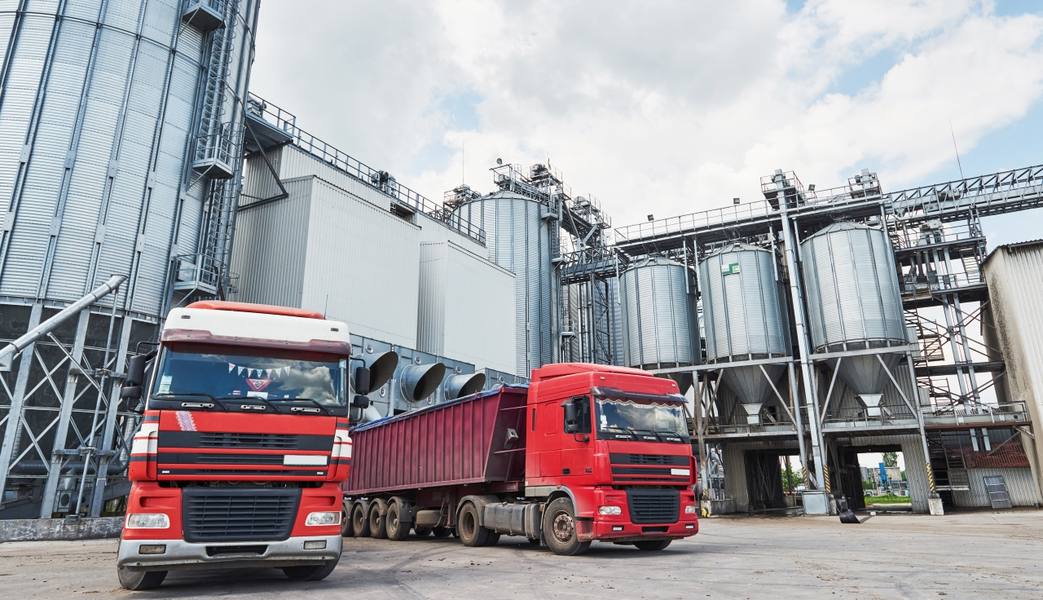
Container logistics provides access to markets where there are no large grain terminals, but there is a developed container infrastructure.
The global logistics of agricultural products continues to change. Previously, grain, oilseeds and other agricultural products were almost always shipped in bulk through specialized terminals, but today more and more exporters consider container transportation as a full-fledged alternative.
The growth of containerization of world transport is due not only to the development of logistics infrastructure, but also to changes in the structure of demand. Buyers are becoming important not only the price, but also the speed of delivery, the flexibility of routes, the safety of products and the ability to supply relatively small batches.
We will analyze in which cases container logistics really turns out to be more profitable than traditional bulk transportation and what factors should be taken into account when choosing an export scheme.
Why container shipping is becoming more popular
The container allows you to turn the cargo into a universal transport unit.
The same container can be loaded at the manufacturer's warehouse, transported by road to the railway terminal, then sent by train to the port and then by sea to the destination country without additional overloading of the goods themselves.
This significantly reduces the number of operations with the cargo and reduces the risk of damage.
In addition, container logistics provides access to markets where there are no large grain terminals, but there is a developed container infrastructure.
When the container is more profitable bulk transportation
1. Small batches of products
Not every exporter is able to form a shipload of grain with a volume of tens of thousands of tons.
The container allows you to send much smaller volumes.
This is particularly convenient:
- small agricultural holdings;
- cooperatives;
- exporters of niche products;
- organic producers;
- Companies that are just starting to export.
You do not need to wait for the accumulation of a large volume of goods.
2. Working with multiple buyers
If one container is destined for one importer and the other for another, the products can be easily separated at the stage of shipment.
In bulk transportation, such a scheme is much more complicated.
3. Export of products with high added value
Containers are often used to transport:
- seeds;
- packaged products;
- mixed feed;
- flour;
- croup
- vegetable oils in specialized containers;
- organic products;
- feed additives.
The higher the cost of production per ton, the less critical the difference in transport costs.
4. Remote regions
If the company is located far from the seaport, the container is often more convenient.
It can be loaded directly next to the production.
This reduces the number of overloads and reduces the likelihood of losses.
5. Working with Asian markets
Many buyers in China, Vietnam, Indonesia, Malaysia and South Korea are actively working with container deliveries.
This allows:
- Import faster;
- It is easier to distribute goods between warehouses;
- Reduce inventory balances;
- Buy products in regular batches.
When shipping is more profitable
Despite the growth of containerization, the classic scheme continues to be the most economical at large volumes.
It is particularly effective if:
- Tens of thousands of tons are exported;
- access to the grain terminal;
- products of standard quality;
- regular delivery;
- The buyer is ready to accept ship shipments.
With large volumes, the cost of transporting one ton is usually lower when using specialized bulk carriers.
Which crops are most often shipped in containers?
Container logistics is actively used for export:
- peas;
- lentils;
- chickpea
- beans;
- flax;
- coriander;
- millet;
- oats;
- buckwheat;
- sunflower seeds;
- rapeseed
- soybeans;
- flour;
- mixed feed;
- deep-processing products.
For niche crops, containers often become almost standard.
The main advantages of container transportation
Product safety
The container reliably protects the cargo from:
- rainfall;
- pollution;
- foreign impurities;
- mechanical damage.
This is especially important for long-term international transportation.
Minimum overload
Each additional overload increases the risk of:
- losses;
- mixing of parties;
- damage to packaging;
- reducing the quality of products.
The container helps to avoid most of these problems.
Simpler logistics
The container can be delivered to almost anywhere.
No specialised grain terminal is required.
This is especially true for small exporters.
Convenient party control
Each container has its own number.
Easy:
- monitor movement;
- prepare documents;
- quality control;
- keep records of supplies.

Disadvantages of container logistics
Container shipping also has limitations.
Among the main ones:
- higher cost of transportation of one ton at large volumes;
- Dependence on the availability of free containers;
- seasonal shortage of equipment;
- weight restrictions;
- The need for high-quality container loading.
In addition, with improper loading, it is possible to shift products during transportation.
What affects the cost of transportation
The cost consists of several factors at once:
- distance;
- mode of transport;
- tariffs of shipping lines;
- season;
- the cost of renting containers;
- terminal processing;
- customs clearance;
- certification;
- insurance;
- Additional services.
Therefore, to compare only the price of sea freight is incorrect.
It is necessary to calculate the entire logistics chain.
How to choose the optimal scheme
Before concluding an export contract, it is advisable to answer several questions.
How much product is planned to be shipped?
For small batches, the container is often more convenient.
Where is the buyer?
If a country is actively using container terminals, such a scheme could speed up delivery.
How important is speed?
Container services are usually shipped on a regular basis, allowing for more flexible delivery planning.
Is there a specialized grain terminal nearby?
If not, the container can significantly reduce domestic transportation costs.
What's the cost of the product?
The higher the price of the goods, the less the impact of transportation costs on the final profitability.
Trends in the coming years
Experts predict further growth of containerization of agricultural exports.
There are several reasons:
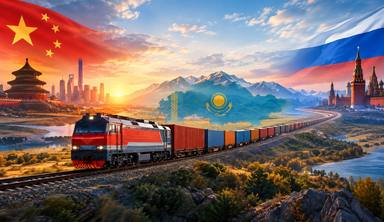
- development of transport corridors between Russia and Asia;
- Increased supply of niche crops;
- growth of processed products;
- Digitalization of logistics;
- development of multimodal transport;
- Increased requirements for product quality and traceability.
Container transportation will be particularly active in the direction of China, Southeast Asia, the Middle East and Africa.
Outcomes
Container transportation is not a universal replacement for bulk supplies. Each scheme has its advantages and optimal applications.
When it comes to large volumes of grain crops, classic shipping is often the most economical option. However, for small shipments, niche products, high value-added supplies and multi-buyer operations, container logistics is often more convenient, flexible and secure.
The main rule of successful export is not to choose the cheapest way of delivery, but the one that provides minimum total costs, safety of products and fulfillment of obligations to the buyer.