How to choose the right logistics scheme when exporting grain

Even a small reduction in the cost of delivery by several dollars per ton at volumes in the tens of thousands of tons can increase the profit of the company by millions of rubles.
The export of grain is not only the search for a buyer and the execution of a contract. One of the key factors of a successful transaction is well-built logistics. It directly affects the cost of production, delivery time, cargo safety and final profit of the exporter.
Mistakes in choosing a logistics scheme can lead to delays, additional costs, fines, and even contract disruption. Therefore, even before the start of deliveries, it is important to determine which route the grain will move, by what transport it will be delivered and through which terminals it will pass.
We will analyze the main transportation options and the criteria for choosing the optimal scheme.
Why logistics is so important when exporting grain
Grain refers to bulk cargo with a relatively low cost per ton. That is why transport costs occupy a significant share in the cost of exports.
Even a small reduction in the cost of delivery by several dollars per ton at volumes in the tens of thousands of tons can increase the profit of the company by millions of rubles.
In addition to cost, logistics affects:
- deadlines for the execution of the contract;
- safety of product quality;
- fulfillment of the requirements of the buyer;
- the speed of cash turnover;
- competitiveness of the exporter.
Therefore, the choice of route always begins with a detailed calculation of the supply economy.
What determines the choice of logistics scheme
There is no universal route. For each batch of grain the scheme is calculated individually.
Main factors:
- region of production;
- batch size;
- country of destination;
- delivery time;
- infrastructure of the region;
- seasonality;
- cost of transportation;
- Free capacity in ports and terminals.
For example, the same batch of wheat from the Altai Territory and the Krasnodar Territory will have completely different logistics.
Main types of grain transportation
Road transport
Road transportation is more often used in the first stage of delivery - from farm to elevator, railway station or river terminal.
Advantages
- high mobility;
- the possibility of picking up cargo directly from the farm;
- Minimal dependence on schedules.
Deficiencies
- high cost at long distances;
- volume limitations;
- dependency on the condition of the roads.
Road transport is most effective at distances up to 200-300 kilometers.
Rail transport
For most Russian exporters, the railway remains the main way of delivering grain to seaports.
Advantages
- low cost of transportation of large volumes;
- high capacity;
- The possibility of transportation for thousands of kilometers.
Deficiencies
- the need to book wagons in advance;
- Dependence on railway infrastructure;
- Possible delays in high season.
If the supply volume is several thousand tons, the railway is usually the most profitable option.
River transport
In some regions, inland waterway delivery is used.
It is most popular during navigation.
Advantages
- minimum cost of transportation;
- The possibility of transporting large consignments.
Deficiencies
- seasonality;
- limited number of river terminals;
- dependency on water level.
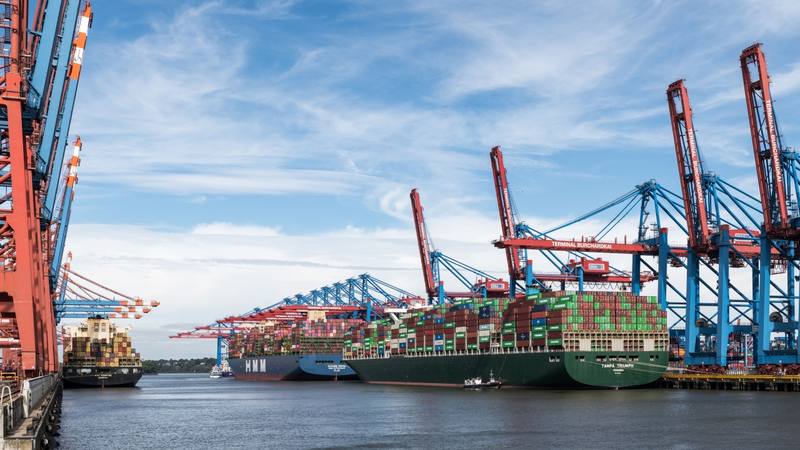
Shipping
Almost all grain exports to foreign countries are completed by sea transportation.
This is where the ultimate cost of international logistics comes from.
When selecting a port, account shall be taken of:
- transshipment cost;
- port depth;
- availability of free capacities;
- speed of ship handling;
- availability of railway approaches.
Direct or multimodal logistics
At short distances, one mode of transport is sometimes sufficient.
But in most cases, grain exports are multimodal transportation.
For example:
Field → car → elevator → railway → sea terminal → ship → foreign port.
The better coordinated all the stages, the less likely downtime and additional costs.
How to choose a port for export
The choice of port depends on several factors.
Consideration should be given to:
- direction of delivery;
- transshipment cost;
- loading of terminals;
- speed of registration of documents;
- availability of free vessels;
- Storage rates.
Sometimes the nearest port is not the best.
A longer route can be offset by lower cargo handling costs.
Do you need to store grain before export?
The shipment is not always sent to the buyer immediately after the harvest.
Sometimes storage allows:
- wait for the growth of world prices;
- form a large export consignment;
- fulfill the requirements of the buyer in terms of volume;
- Optimize logistics.
However, storage also increases costs.
Therefore, it is necessary to calculate the economic efficiency of such a decision in advance.
What mistakes do exporters make most often?
One of the most common mistakes is choosing a carrier exclusively at the minimum price.
Low fare does not always mean profitable transportation.
No less dangerous:
- absence of a reserve route;
- incorrect timing planning;
- Ignoring seasonal restrictions;
- lack of coordination between all participants in the transport;
- Selection of an unprepared terminal;
- underestimating the time of paperwork.
Each such error can lead to additional costs or delay in the execution of the contract.
How to reduce the cost of logistics
Savings are achieved not through a single solution, but through an integrated approach.
The most effective ways to:
- Plan transportation in advance;
- use multimodal schemes;
- unite parties;
- Choose the optimal season of shipment;
- Analyze tariffs of different terminals;
- minimize downtime of transport;
- Pre-reserve the capacity of ports and wagons.
Constant analysis of logistics costs can significantly improve the efficiency of export operations.
Why logistics should be reviewed regularly
Logistics is one of the most dynamic components of foreign trade.
Change:
- transport tariffs;
- export directions;
- capacity of ports;
- transshipment cost;
- exchange rates;
- international political situation.
The scheme, which was profitable a year ago, today can be significantly inferior to alternative routes.
Therefore, successful exporters regularly recalculate the economics of each shipment, rather than working according to a once chosen scenario.
Outcomes
Properly chosen logistics scheme is one of the main factors of successful grain export. It reduces transportation costs, reduces delivery times, minimizes risks and increases the competitiveness of products in the world market.
The optimal route is always built taking into account the region of production, the volume of the consignment, the direction of export, the available infrastructure and the current situation on the transportation market. The more carefully the logistics are worked out, the more stable the contracts are executed and the higher the final profitability of export operations.